
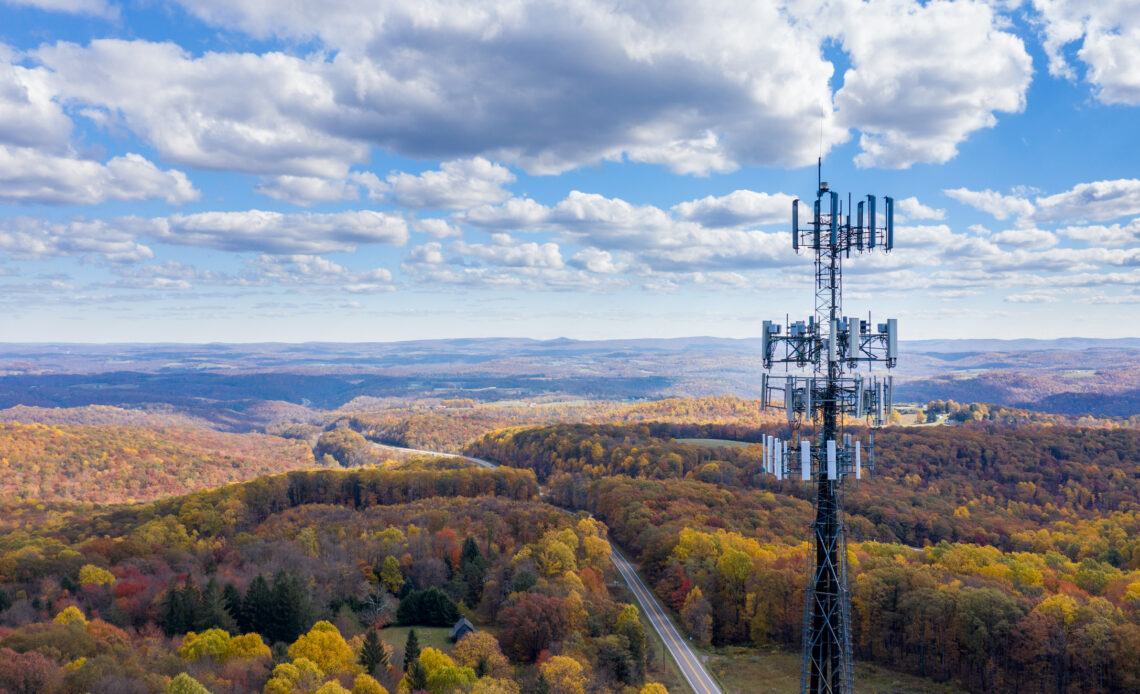
Here’s something that might surprise you: every time you make a video call at night, artificial intelligence is quietly deciding which cell towers to put to sleep around you. While you’re chatting with friends across the country, AI algorithms are scanning dozens of nearby antennas, determining which ones can take a power nap without dropping your call.
The result? Energy savings equivalent to taking entire neighborhoods off the grid.
The telecommunications industry devours 2-3% of all electricity generated on Earth. That’s roughly the same amount as entire countries like Argentina or South Africa. For telecom operators, energy costs can consume up to 40% of their budgets – a staggering expense that grows every time someone streams a movie or joins a video meeting.
But here’s where it gets interesting: AI isn’t just optimizing networks anymore. It’s completely rewriting the rules of how telecommunications infrastructure consumes power.
The 5G Paradox That’s Breaking Energy Budgets
There’s a cruel irony at the heart of modern telecommunications. 5G technology can be up to 90% more energy-efficient per bit of data than 4G networks. Sounds great, right? Except there’s a catch that’s keeping telecom executives awake at night.
That efficiency gain gets completely wiped out by our appetite for data. High-definition streaming, cloud gaming, and augmented reality apps are pushing data consumption through the roof. A typical 5G base station requires up to 70% more power than its 4G predecessor, and operators are installing thousands of these power-hungry towers to meet demand.
The Radio Access Network – that sprawling web of cell sites and antennas connecting your device to the internet – consumes roughly 70% of a telecom operator’s entire energy budget. During off-peak hours, these networks continue burning massive amounts of electricity to serve minimal traffic. Picture a stadium blazing with floodlights during an empty Tuesday afternoon, and you’ve got the right idea.
An office park at midnight still gets the same energy-intensive service as during rush hour. A residential neighborhood receives full network capacity while everyone’s at work. This fundamental mismatch between energy consumption and actual demand represents billions in wasted electricity globally.
Enter the AI Energy Whisperers
Artificial intelligence is transforming telecom networks from energy-wasting giants into precision instruments that consume power only when and where it’s needed. These aren’t simple on-off switches – they’re sophisticated prediction engines that can forecast network demand with remarkable accuracy.
AI systems analyze vast datasets, including historical traffic patterns, weather impacts, local events, and even social media trends, to predict exactly how much capacity each cell site will need hour by hour. This predictive capability enables networks to operate more like living organisms than static infrastructure.
The Art of Intelligent Sleep
AI’s secret weapon is sophisticated sleep mode management across network components. This goes far beyond turning equipment off – it’s a nuanced approach that can shut down individual antenna channels when full capacity isn’t needed, power down entire frequency bands while consolidating users onto efficient base layers, and put radio units into deep hibernation states during low-traffic periods.
The system operates as a closed-loop optimization engine, continuously monitoring network performance to ensure energy-saving actions never compromise service quality. When traffic suddenly surges, the system instantly wakes necessary components, maintaining a seamless user experience while maximizing efficiency during quiet periods.
Real-World Results That Actually Matter
Leading operators worldwide are deploying AI-powered energy systems with measurable results proving this technology works in practice, not just in laboratories.
Samsung’s AI-Enhanced Energy Saving Manager (AI-ESM), deployed across major commercial networks, creates self-optimizing systems that respond dynamically to real-world conditions. Field testing with a Tier 1 US operator delivered 15% average energy savings with peak reductions reaching 35% under optimal conditions. These aren’t theoretical numbers – they represent actual kilowatt-hours saved and real dollars back in operators’ pockets.
Europe leads deployment driven by aggressive sustainability regulations. Asia-Pacific markets focus on dense urban optimization where energy efficiency directly impacts profitability. North American operators are scaling up trials motivated by both cost reduction and corporate sustainability commitments.
The implementations focus on practical applications: automatically adjusting antenna power levels based on coverage requirements, dynamically allocating spectrum resources to minimize consumption, and coordinating sleep modes across multiple network layers.
The Autonomous Future is Almost Here
Next-generation AI systems will achieve complete energy autonomy – networks that automatically manage power consumption without human intervention. These systems will coordinate optimization across entire networks, predict demand changes days in advance, and implement energy-saving measures while maintaining optimal performance.
Self-learning algorithms will continuously improve strategies based on network behavior, seasonal patterns, and emerging usage trends. Future AI systems will integrate external data, including weather forecasting, urban development planning, and social event scheduling, to predict energy requirements with unprecedented accuracy.
The technology will expand beyond individual components to orchestrate optimization across entire telecommunications ecosystems, coordinating energy usage between radio networks, core infrastructure, and edge computing resources for maximum efficiency.
Networks That Think Green
AI-powered energy optimization represents more than operational improvement – it’s becoming essential for telecom industry survival in an increasingly carbon-conscious world. As data demand continues exponential growth, only networks powered by artificial intelligence will achieve the dual objectives of expanding capacity while reducing environmental impact.
The transformation from energy-wasteful to intelligently optimized networks isn’t just technologically possible – it’s economically necessary and environmentally critical. Today, operators implementing intelligent energy management position themselves for regulatory compliance, investor approval, and competitive advantage in sustainable network operations.
In a world where every video call, every streaming session, and every cloud backup adds to our collective carbon footprint, AI quietly ensures that staying connected doesn’t cost the earth. The networks of tomorrow won’t just be faster and smarter – they’ll be the greenest infrastructure systems ever built.